

The math has always been simple: Driving + drugs = a fatal equation.
But the Victoria research confirms just how fatal.
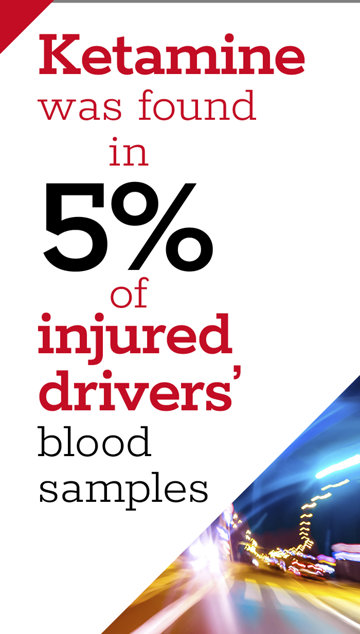
The authors analyzed blood tests from drivers admitted to hospitals and found ketamine in 5 percent and fentanyl in 2 percent of injured drivers.
“Drugged driving remains a public health priority, and more action is needed to stem this disturbing trend.”
The study has been called the most comprehensive one yet, examining not just street drugs and alcohol, but abuse of prescription drugs as well.
But while the Monash study focuses on Victoria, the problem extends far beyond one state.
In the US, for example, a 10-year investigation covering 33 states found that the percentage of fatally injured drivers who tested positive for drugs rose from 20 percent in 2007 to 30 percent in 2017.
The authors concluded: “Drugged driving remains a public health priority, and more action is needed to stem this disturbing trend.”
Five years later, a separate study by US highway safety regulators revealed that over half of people injured or killed in traffic crashes had one or more drugs, or alcohol, in their system. “It’s scary to all of us,” said Michael Brooks, head of the nonprofit Center for Auto Safety. “But frankly, I don’t think I’m that surprised.”
Collectively, the statistics pose a warning: Ride in a car with a driver who’s high and you’re gambling with your life.
And the risk grows exponentially when the impaired individual is flying a commercial plane.
As previously reported by Freedom, the National Transportation Safety Board found in a 2014 study that 23 percent of pilots killed in crashes had at least one drug in their system.
Despite Federal Aviation Administration warnings, a 2020 study found that figure had risen to 28 percent.
Whether flying or driving, it’s getting more dangerous out there—both in America, as more states legalize marijuana, and in Victoria, where possession of up to 50 grams of pot (roughly 50 to 200 “servings”) frequently results in a mere warning and referral to drug counseling.
These trends aren’t just statistics—they affect everyday choices on your roads and in your neighborhoods.
Say you live in Colorado, Maryland, Missouri or any of the 24 states and three territories where recreational marijuana is legal. Can you trust the blind date driving you to that concert? If not, perhaps an Uber would be safer? Unlikely. Uber drivers aren’t drug tested unless there’s a crash—and by then, it’s too late.
The old highway safety motto “Be alert and stay alive” no longer means to simply keep your eyes on the road and your hands on the wheel.
It means don’t kill your loved ones and yourself for the sake of a high.