

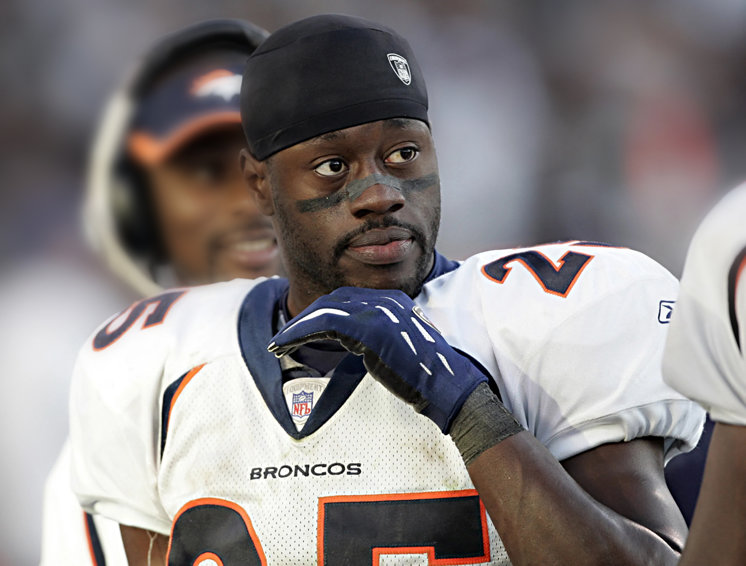
But for the former Denver Broncos safety, the hardest battles during his 1996–2009 professional career were the ones that took place long after the final whistle. A devastating knee injury shook his confidence. Silent expectations of toughness kept him from asking for help. And the pressure to stay “unbreakable” never let up.
Three-quarters of a century after the publication of Dianetics: The Modern Science of Mental Health, the 1950 bestseller by Scientology Founder L. Ron Hubbard about how the mind can be relieved of painful, traumatic experiences to restore clarity and well-being, Ferguson says the book became the missing tool that helped him understand—and rise above—his hidden stress points.
As the classic text marks its 75th year, Ferguson, a Scientologist who lives with his wife, two sons and a daughter in Denver, is using his platform to widen the conversation around mental health in sports—and he speaks with Freedom about resilience, stigma, the NFL’s evolving locker room culture, and why the mind may be the most important field any athlete steps onto.
What’s the first thing you do when you wake up?
The first thing I do is thank God for waking me up—for allowing me to experience the joy of just being alive.
Are you a coffee first guy, or a workout first guy?
I don’t drink coffee. Never have. People get hooked on coffee and tell themselves they can’t get their day started without it—that they’re not their best person, because they haven’t had their coffee yet. I’m not that type of person.
What’s one thing you do regularly that has nothing to do with sports or work—that you do just for pure joy?
Being around my family. There’s no better joy in life than that.
Do you have any routines, rituals or superstitions left over from your football playing days?
When I was playing, I would want to get to the game early because I never wanted to be late. I was just talking to my kids about this and my son said to me, “Oh, that’s one of the reasons why you wake up sometimes and you can’t go back to sleep!” When you have been regimented playing football like I was, it becomes part of you. I always tell my kids: “Being on time is being late—being early is being on time.” When I have to go somewhere, I tell my family I cannot wait and I will not wait.
What about guilty pleasures—like food, music, TV, anything of that sort?
I guess my guilty pleasure would be watching as much football as I can.
Do you have a prized possession that has a story behind it—like a Ferrari maybe?
I’m not a Ferrari type guy, but yeah, I do have one prized possession. It revolves around my former teammate, Curtis Martin, one of the greatest running backs in NFL history. It was clear from what he did both on and off the field that he was a modest person. I looked up to him both as an athlete and as a man. After one particular game, I asked him randomly if I could have his shoes. And I was shocked that he signed them and instantly gave them to me. That was one of the first pieces of sports memorabilia I ever received.
The part that made it so big to have those shoes was that I was a nobody, and he didn’t have to give them to me.
Can you describe the moment when you realized mental struggles are tougher than physical ones?
Most people look at football as being physical. But it is 99.1 percent mental. And then you get injured. Guess what? The physical-mental ratio goes up even more. The struggle starts physically, but it quickly becomes mental. It’s like, now you’re alone at the end of the bench by yourself. And you start thinking of the worst things—a flood of negativity starts filtering into your mind. Everything immediately turns dark and gloomy, the lights are turned off all around you, and yet it still feels like there’s a spotlight focused solely on you.
Your biggest challenge is you, because you have to fight back against your body to get it back to where it was.
If you could speak to a younger version of yourself struggling after your injury, what would you tell him?
That you may not be able to see the light at the end of the tunnel right now, but it’s gonna be alright.
What was the culture in the locker room like when talk got around to stress, fear or doubt? And has that changed meaningfully since you retired?
Well, first and foremost, guys don’t talk about that stuff. It’s a sign of weakness—you can’t have that playing this sport. You can’t show it even if it’s happening to you. You may find someone in your family, or a good friend you can confide in, but you’re not mentioning that to anyone on your team.
And if you could implement one mental health practice across the NFL, what would it be?
Talking more—to the point where a player’s expression of his feelings is not only not used against him but is actually welcomed. That we want you to be expressive about what you’re going through.
More broadly, is there a conversation happening in the NFL today that you wish had existed when you were playing?
Well, there’s more of an emphasis on talking about “mental health.” I think there’s even a Mental Health Awareness Month. The point is, we may have such a month, but are we talking about the right things? Are we talking to the right people? Are we getting the right advice? Because there’s a difference between being “evaluated” and effectively figuring things out for yourself.
When did you first encounter Dianetics, and what was it about the book and the techniques in it that resonated with you?
My first encounter with Dianetics was when I was going through my injury. Reading the book, I learned that we have an analytical mind and we have a reactive mind. And the reactive mind is the area that stores the losses and the traumas that we’ve been through—all the gnarly stuff. The moment that we’re in trouble, the reactive mind is the first thing that comes forward. And sometimes it can overshadow the analytical mind, if you allow it to.
There are a lot of things Dianetics covers. One of them is the goal of man—it’s going to look different for every single person, but your overall goal is to survive.
So how do you do that—how do you survive?
Well, for one, you’ve got to be competent, because if you’re not competent, it’s going to decrease your level of survival. You might not be a professional athlete, but there’s something else that you are good at, right? So we need to find out what that is.
What do you think makes Dianetics still so relevant today, 75 years after the book’s publication?
Because it’s real. It speaks to what we all actually go through, and it takes you through life’s journey as you read it. It allows you to figure out things yourself, as opposed to someone telling you who you are.
How do younger athletes respond when you share such concepts with them?
I just use what has helped me to speak to them directly in ways that they understand. Everyone’s trying to survive in some way. So giving them encouragement on their journey is, I find, the best practice.
What would you say is the one thing people get wrong about former NFL players?
That we are all arrogant p—ks. There are some individuals who are, without a doubt, not great people to be around. But there are a number of great guys who play the game, who have gone through their own fears and struggles. And that’s why these guys have charitable foundations—they have groups that they work with on a consistent basis. So, don’t judge every book by its cover.
When you think about your legacy—not necessarily in football but in your life—what do you hope people will say about you?
That I was a great person. I was very down to earth. I was easily approachable. And I thought about others before I thought about myself.
When people come up to me, they are very excited. And I tell them that I understand why they’re excited, but that I’m just a regular-ass guy—a regular, everyday dude. It just so happens that I did this great thing—football—that everyone loves.
You’ve coached, you’ve done broadcasting, you’ve been a mentor. Which of these roles brings you the most joy?
I’m gonna have to say all of the above. While broadcasting and mentoring, I try to put out positive vibes. I talk to people so that I get to know their story and they know mine.
You can inspire just by example. Someone looks at you, and they go, “Wow, this guy has been through a lot and he’s still going through it all, still moving forward. And if he can do it, why can’t I?”
What projects or causes matter most to you these days?
Projects that involve having a better way of life. Now, I would like to say that I’m going to pull out my Harry Potter wand and wave it around and no one’s going to have any problems. I’d love to be able to do that—but it’s a pipe dream. So I focus on one person, one group at a time. I surround myself with people and let them know that just because I played football professionally and am a broadcaster and mentor doesn’t mean I don’t have problems. I have my struggles, and I let people know that I’m there to help them with theirs—that they’re not alone.